
WU CHI TAI CHI
Tai Chi for Health, Balance & Internal Development
What is Wu Chi Tai Chi?
Wu Chi Tai Chi is the health, wellbeing and internal-development pathway within Wu Chi Kung Fu.
It is a progressive practice that brings together natural movement, posture, balance, breathing, relaxation and awareness to develop greater harmony between mind and body.
Tai Chi is often described as a gentle or slow exercise, but the depth of the practice extends well beyond its external movements. As your practice develops, you learn to recognise and release unnecessary tension, improve your structural alignment, refine your balance and become increasingly aware of how the body moves and responds.
This requires patience, consistency and a willingness to develop gradually. The aim is not simply to learn a sequence of movements, but to understand how the principles of Tai Chi can become integrated into the way you move, breathe and carry yourself.
At AIMA, Wu Chi Tai Chi is taught progressively, allowing each student to develop at their own pace while building a sound foundation for continued practice.
More Than Movement
Wu Chi Tai Chi brings together four interconnected areas of training:
Nei Kung — developing the body through internal training
Qi Kung — regulating mind, breath, Qi and Shen
Tai Chi Form — developing movement, balance and continuity
Sensing Hands — developing connection, listening and responsiveness
Together, these form the foundation of the Wu Chi Tai Chi pathway.
The practice begins simply, but its depth develops over time. Through regular training, students are encouraged to become more aware of their body, their breathing, their balance and their relationship with movement.
Wu Chi Tai Chi is not about forcing the body to perform. It is about learning to move with greater awareness, softness, balance and naturalness

THE FOUR PILLARS OF WU CHI TAI CHI
Wu Chi Tai Chi is developed through four interconnected pillars of training. Each pillar has its own purpose, while together they create a progressive approach to developing the body, breath, movement, awareness and connection.
NEI KUNG
Developing the Tai Chi Body
Nei Kung develops the physical foundations required for Tai Chi practice. Through gentle loosening exercises, standing practices and internal conditioning, students learn to release unnecessary tension, improve structural alignment and develop greater awareness of the body.
The aim is to create a body that is relaxed, stable and responsive, providing the foundation for natural and efficient movement.
QI KUNG
Regulating Mind, Breath, Qi & Shen
Qi Kung develops the relationship between the mind, breath and body through regulated breathing, awareness and controlled movement.
Students learn to settle the mind, regulate the breath and develop a more refined awareness of internal sensations and movement. This supports relaxation, concentration, vitality and the ability to remain centred while moving.
TAI CHI FORM
Developing Movement, Balance & Continuity
The Tai Chi Form brings the principles developed through Nei Kung and Qi Kung into continuous movement.
Through slow, controlled and coordinated movements, students develop balance, posture, weight transfer, grounding and whole-body integration. The form provides an opportunity to practise moving with softness and continuity while maintaining awareness throughout the body.
SENSING HANDS
Developing Connection, Listening & Responsiveness
Sensing Hands introduces partner-based training, allowing students to explore the principles of Tai Chi through physical connection with another person.
Through controlled exercises, students develop sensitivity, balance, alignment, grounding and the ability to listen and respond through touch and movement.
Sensing Hands complements the solo practice of Tai Chi Form by taking the principles of relaxation, connection and responsiveness into an interactive environment.
THE FOUR PILLARS WORK TOGETHER
These are not four separate forms of exercise. They are interconnected aspects of one Wu Chi Tai Chi practice.
As students progress, the qualities developed in one area support and deepen the others:
Nei Kung → Qi Kung → Tai Chi Form → Sensing Hands
The purpose is to progressively integrate body, breath, mind, movement and connection into a more natural and unified practice.
UNIFIED MIND & BODY PRINCIPLES
Wu Chi Tai Chi is guided by 11 key principles that develop the integration of mind and body as one unified practice.
For the introductory pathway, particular emphasis is placed on the first five key points, while the remaining principles are introduced progressively as students advance in their training.
BE SOFT
Release unnecessary tension and allow the body to become relaxed, open and responsive. Softness does not mean weakness; it allows the body to move with greater freedom and efficiency.
BE SLOW
Slow movement develops awareness. By reducing speed, you have time to feel posture, balance, breathing and weight transfer, allowing a greater understanding of how the body moves.
BE NON-AGGRESSIVE
Learn to work with the body rather than against it. Avoid unnecessary force, tension and resistance, developing a more receptive and harmonious way of moving.
BE NATURAL
Allow movement and breathing to develop without forcing or exaggerating them. Naturalness comes from progressively removing unnecessary effort and allowing the body to find greater ease and balance.
BE ALWAYS IN MOTION
Maintain continuity within movement. Even when the external movement appears still or quiet, awareness and internal activity continue. Movement and stillness become part of one continuous practice.
These principles are not simply concepts to understand, but qualities to develop through consistent practice. As students progress, the principles become increasingly refined, supporting greater awareness, relaxation, balance, coordination and integration of mind and body.
HEALTH, BALANCE & WELLBEING
Wu Chi Tai Chi provides a gentle yet purposeful approach to developing health, balance and wellbeing through integrated movement, breathing and awareness.
Regular practice encourages the body to release unnecessary tension while developing greater postural awareness, stability, coordination and balance. The slow, continuous nature of Tai Chi gives students time to become more aware of how they move, breathe and respond to changes within the body.
Rather than separating physical exercise from mental wellbeing, Wu Chi Tai Chi brings the two together. Through relaxed movement and mindful awareness, students learn to settle the mind, regulate the breath and develop a greater sense of calm, centredness and presence.
As practice develops, these qualities can support everyday movement and contribute to a greater sense of vitality, confidence and wellbeing.
Wu Chi Tai Chi is not about forcing change. It is about creating the conditions for the body and mind to progressively find greater balance, harmony and natural movement.
TAI CHI, MEDITATION & MIND–BODY INTEGRATION
Tai Chi can be understood as a moving meditation, where the practice of movement provides a way to develop awareness, calmness and a deeper connection between mind and body.
Rather than separating meditation from physical practice, Wu Chi Tai Chi brings them together through relaxed, continuous movement. As the body becomes more settled and unnecessary tension is released, the mind can become quieter and more present.
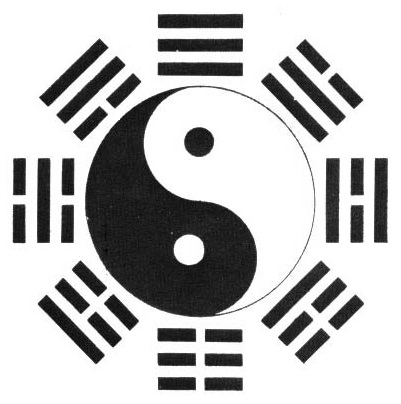
The principles of Yin and Yang provide an important foundation for this process. Through practice, students learn to recognise and harmonise complementary qualities such as movement and stillness, relaxation and stability, softness and strength, and activity and rest.
Wu Chi Tai Chi also embraces the principle of Wu Wei — often understood as effortless or natural action. This does not mean doing nothing or becoming passive. Rather, it encourages us to reduce unnecessary force and allow appropriate action to arise naturally from awareness and balance.
Through consistent practice, these principles can become more than ideas. They are progressively experienced through the body, helping develop a more unified relationship between mind, breath and movement.
Tai Chi becomes a practice of learning to move with greater awareness, balance and naturalness — both within the practice itself and in the way we engage with everyday life.
SENSING HANDS —
CONNECTION & AWARENESS
Sensing Hands is the partner practice within Wu Chi Tai Chi, providing an opportunity to explore the principles of Tai Chi through gentle physical connection with another person.
Through structured exercises, students learn to listen through touch, maintain their own balance and alignment, and respond naturally to changes in pressure, movement and direction.
Rather than relying on muscular force or competition, Sensing Hands develops qualities such as sensitivity, relaxation, grounding, connection and responsiveness. Students learn to maintain their centre while becoming increasingly aware of their partner's movement and intention.
Sensing Hands complements the solo practice of Tai Chi Form by allowing the principles developed through individual training to be experienced in a shared and interactive environment.
As students become more familiar with the practice, Sensing Hands provides a deeper understanding of how balance, connection, Yin and Yang, and natural movement can work together.
Within Wu Chi Kung Fu, Sensing Hands also provides a bridge between the health and internal-development practice of Wu Chi Tai Chi and the deeper principles explored through Wu Chi Chuan, the combative pathway of the system.
Sensing Hands is not about winning or overpowering a partner. It is about learning to listen, connect, adapt and remain centred while in motion.
TAI CHI AND INTERNAL MARTIAL DEVELOPMENT
Although Wu Chi Tai Chi is primarily presented through its health, balance and internal-development pathway, its principles have a deeper relationship with martial arts.
The slow and controlled practice of Tai Chi allows students to explore qualities that are often difficult to recognise through faster movement. Relaxation, balance, grounding, alignment, sensitivity and the ability to remain centred under changing conditions can all be progressively developed through training.
These qualities are not developed simply by learning the external sequence of the Tai Chi Form. They emerge through understanding how the body works as an integrated whole and learning to reduce unnecessary muscular tension and force.
Within Wu Chi Kung Fu, these principles are also explored through the combative pathway of Wu Chi Chuan. The two pathways have different purposes, but share fundamental internal principles.
Wu Chi Tai Chi therefore provides a valuable foundation for those who wish to understand the deeper internal qualities of martial movement, while remaining accessible to students whose primary interest is health, wellbeing and personal development.
The martial depth of Tai Chi does not need to be the starting point. It is a dimension of the practice that can be explored progressively as understanding and experience develop.
THE WU CHI TAI CHI JOURNEY
Wu Chi Tai Chi is taught as a progressive journey rather than something that needs to be mastered all at once.
Students begin by developing the fundamental qualities of relaxation, awareness, balance and natural movement. As these foundations become familiar, training progressively introduces greater coordination, sensitivity and integration through the Four Pillars of Wu Chi Tai Chi.
INTRODUCTORY PRACTICE
The introductory stage establishes the foundations of Wu Chi Tai Chi. Students become familiar with the basic principles, posture, breathing, movement and awareness while beginning to develop the first five Unified Mind & Body Principles.
LEVEL ONE
Level One builds upon these foundations through more structured and progressive training. Students develop greater understanding of Nei Kung, Qi Kung, Tai Chi Form and Sensing Hands while progressively integrating the principles into their practice.
CONTINUING DEVELOPMENT
As students continue their training, the practice becomes increasingly subtle and refined. The remaining Unified Mind & Body Principles are introduced progressively, while existing skills are deepened through continued practice.
There is no need to rush this process. Tai Chi develops through consistent practice, patience and experience, allowing each student to build understanding at a natural pace.
The journey is not simply about learning more movements. It is about developing a deeper understanding of how the principles of Wu Chi Tai Chi can be experienced and integrated through the whole body and mind.
BEGIN YOUR WU CHI TAI CHI JOURNEY
Wu Chi Tai Chi is a practice that can be developed throughout life. You do not need to be experienced, highly flexible or physically strong to begin. What matters is a willingness to learn, practise and develop gradually.
At AIMA, we provide a supportive and progressive training environment where students can develop their understanding of Tai Chi step by step, with guidance from an experienced instructor.
Whether your interest is health and wellbeing, balance and movement, meditation, personal development or deeper internal training, Wu Chi Tai Chi provides a pathway for continued learning.
START WHERE YOU ARE
Come as you are and begin with the foundations.
Learn to move with greater awareness.
Develop balance and relaxation.
Explore the relationship between mind and body.
Progress at your own pace.
Your Wu Chi Tai Chi journey begins with the first step.
TRAIN WITH AIMA
AIMA – Australian Institute of Martial Arts
Specialising in the Art of Wu Chi
Internal Kung Fu for Self-Defence, Health & Personal Development
WU CHI TAI CHI
Tai Chi for Health, Balance & Internal Development
Discover the practice. Develop the principles. Begin your journey.
[Contact / Class Information / Book a Trial]